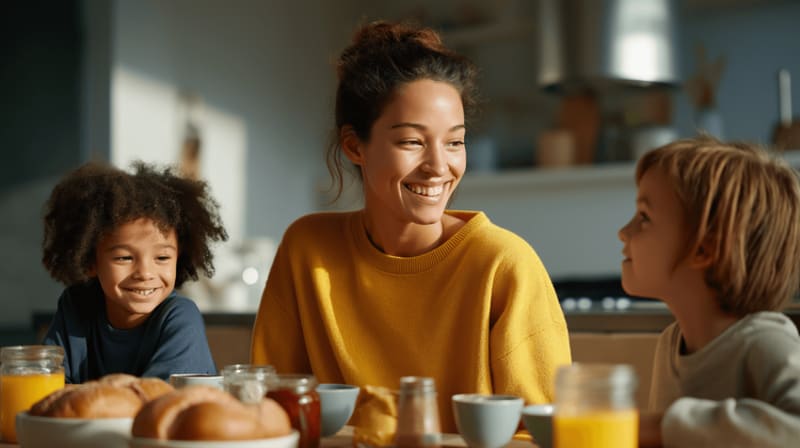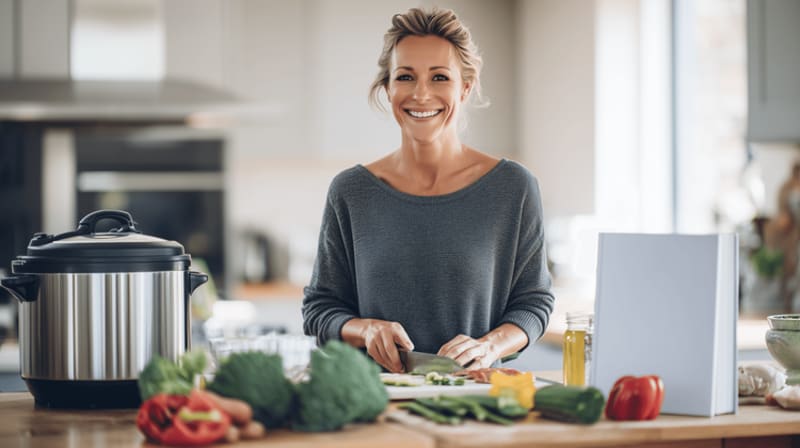
Raise kids who understand nourishment and make balanced food choices.
I’ve never wanted my kids to make healthy choices because I told them to. I want them to understand the WHY so deeply that eventually, the choice becomes their choice.
Because here’s the reality: You will not always be standing next to your child telling them what to eat. Eventually, they’ll be teenagers grabbing food with friends, college students filling their own grocery carts, and adults deciding what goes into their bodies every single day. So, what happens when you’re not there?
That’s what matters to me. I don’t want to raise kids who only eat vegetables because Mom or Dad made them. I want to raise kids who understand their bodies, know how food affects the way they feel, and feel empowered to make decisions that support the lives they want to live.
And YES, that can include pizza, candy, and dessert. A healthy relationship with food should be about awareness, balance, self-respect, and ultimately, self-leadership . . . not restriction or perfection.
So, how do you teach that? How do you raise capable, world-ready kids who have a healthy relationship with food? My Family Operating System™ includes a complete blueprint for teaching children how to care for their bodies, with nutrition as one essential piece. Today, I’m giving you a taste (pun intended) of a few of the food principles inside Lauren Magers’ Happy Life System™:
What Does a Healthy Relationship With Food Look Like for Kids?
A child with a healthy relationship with food isn’t one who always chooses the broccoli. It’s one who understands that food should add value and bring them into a higher state of being. These kids can make intentional, thoughtful choices about what they eat without Mom or Dad controlling every decision.
I want my kids to understand that food is fuel, but it’s also part of celebration, tradition, connection, and enjoying this incredible life. They should be able to eat a cookie without guilt AND understand why their bodies need nourishing foods. They should know how to check in with themselves: Am I hungry? Am I full? How does this food make me feel? Do I have energy? Can I focus? What does my body need right now?
That awareness is what we’re building because, eventually, you won’t be making every food decision for them. They’ll be leading themselves.
Watch: What a healthy relationship with food looks like for kids
Why Your Child’s Relationship With Food Matters
Your child is going to have a relationship with food for the rest of their life. Long after they leave your home, they’ll choose what to buy at the grocery store, what to order at restaurants, what to cook for dinner, and what to eat when nobody is watching. That’s why “Eat your vegetables because I said so” isn’t enough.
Rules may control what your child eats while they’re sitting at your table, but knowledge gives them something they can take into adulthood. When kids understand WHY nourishment matters, they have the opportunity to make healthy choices from a place of radical awareness rather than simply following Mom and Dad’s rules.
This is about so much more than getting your child to eat broccoli tonight. We’re helping future adults understand nutrition so they can establish mindful habits, receive food with gratitude, and enjoy it without guilt. With your guidance, they’ll become masters of their health long before they leave your home.
How to Help Kids Develop Healthy Eating Habits Without Controlling Their Food
Teach them why their bodies need nourishment.
Start with the WHY. Instead of simply telling your child that carrots are healthy, teach them what nourishing foods actually do for their body. Talk about strong bones, growing muscles, brain function, digestion, hydration, immunity, and vitality in language they can understand.
You don’t have to turn dinner into a nutrition lecture. Make it relevant to what your child cares about. Maybe that green bean gives their body nutrients it needs to run around outside. Protein supports the muscles they use at soccer practice. Water helps their body stay hydrated while they’re playing.
The point is to move beyond “Eat this because I told you to” and give them information they can eventually use to make decisions without you.
Teach them that food affects more than physical health.
Food does more than nourish our bodies. It can shift our energy, deepen connection, and bring us into a higher state of happiness. Birthday cake makes a celebration feel magical. Grandma’s special recipe carries a family story forward. Pancakes on Saturday morning and popcorn during movie night turn ordinary moments into memories.
Teach your child to receive food with gratitude and recognize everything it brings to the table. When we slow down, appreciate what is in front of us, and enjoy it together, we shift the energy around food from pressure and control to joy and connection.
That is part of a healthy relationship with food too. Your child should grow up knowing that a meal can fuel their body AND hold some of the happiest moments of their life.
Help them connect food to their energy, emotions, focus, and performance.
Help your child notice how food affects the way they experience their day. If they’re an athlete, talk about what gives their body energy before practice and helps it recover afterward. If they have a big test, explore what helps their brain stay focused. If they become tired, irritable, or hungry shortly after eating, encourage them to notice that too.
Ask questions instead of constantly giving answers: “How did that breakfast make you feel this morning?” “Did that snack give you enough energy for practice?” “What could you eat before your game to help your body perform?”
This builds radical awareness. Your child begins connecting what they eat with how they feel and function, giving them the insight they need to make thoughtful choices for themselves.
Talk about what food does, not whether food is “good” or “bad.”
Try to get away from making food a moral issue. Instead of constantly dividing everything into “good food” and “bad food,” teach your kids that different foods do different things for their bodies.
Some foods give us protein. Others offer fiber, carbohydrates, fats, vitamins, or minerals. Some foods give us quick energy. Some keep us satisfied longer. And some foods are just really fun and delicious to eat! When kids understand what food does, they have useful information they can draw from when making their own choices.
Teach them to ask, “How do I want to feel?”
Noticing is the first step. Next, teach your child to use what they’ve learned to make intentional choices. This is one of my favorite questions because it puts the child in the driver’s seat: How do I want to feel?
Maybe they want to feel energized for soccer practice. Maybe they want to concentrate at school. Or, maybe they want something sweet because dessert sounds amazing. Great! Now they can consider what they want from the experience and choose with awareness instead of just asking, “Am I allowed to eat this?”
As they get older, you can take it even deeper: Who do I want to become? Does this choice support that person? We’re teaching them to turn awareness into action, shifting the conversation from external control to internal leadership.
Make room for treats without making them forbidden.
Your kids WILL eat candy. They’re going to have birthday cake, order pizza with friends, eat dessert, and enjoy foods that aren’t necessarily the most nutrient-dense options available.
GOOD.
I want my kids to experience those things because they’re part of a joyful, connected life. I also want them to learn how those foods fit into a balanced relationship with nourishment while I’m still here to guide them.
When treats are neither forbidden nor placed on a pedestal, kids can learn to enjoy them without feeling frantic, secretive, or out of control. They can learn what balance actually looks and feels like while you’re still there to guide them.
Teach balance instead of perfection.
One meal doesn’t determine how well you care for your body. Neither does one snack, one party, or one vacation. Zoom out and teach your child to look at their eating habits as a whole.
If they want something sweet, they can enjoy it. They can also think about what else their body needs that day. If breakfast didn’t keep them full, they can notice that and make a different choice tomorrow. Remember, we’re building radical awareness, not chasing perfection.
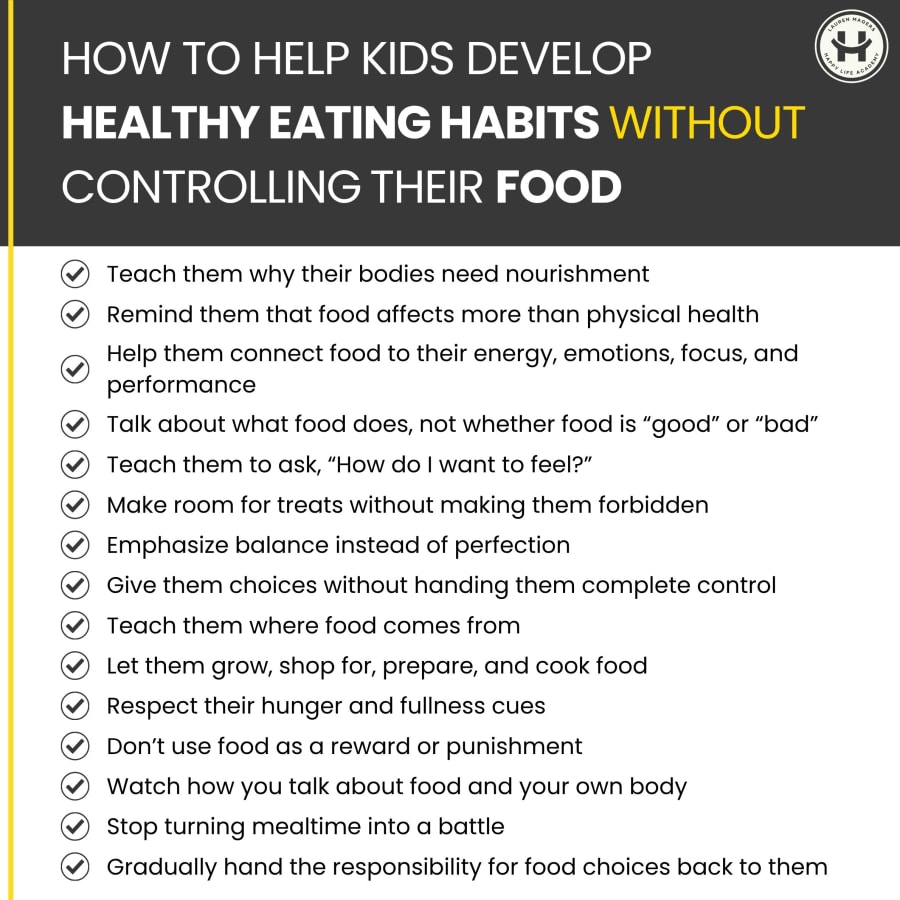
Give them choices without handing them complete control.
Self-leadership develops through practice, and you can create opportunities for that practice at every age. You might decide what foods come into the house while letting your younger child choose which fruit they want with lunch. An older child might help decide what dinners go on the menu or choose snacks for the week.
You’re still the parent. You can create the environment and hold the standards for your family while giving your kids appropriate ownership within them. As they grow and demonstrate more responsibility, they should have more opportunities to make those decisions themselves.
Teach them where food comes from.
Help your kids understand that food doesn’t magically appear in a package at the grocery store. Talk about where fruits, vegetables, grains, meat, dairy, and other foods come from. Grow something together, visit a farm, read ingredient labels, or research a food your child is curious about together.
This doesn’t need to become another subject you formally “teach.” Just invite curiosity into your everyday life. The more your kids understand about what they’re putting into their bodies, the more you raise their vibrations around food by replacing mindless consumption with awareness, gratitude, and respect.
Let them grow, shop for, prepare, and cook food.
Bring your kids into the process instead of making food something that suddenly appears in front of them three times a day. Take them grocery shopping. Let them pick out a new vegetable. Give them a small garden bed. Teach them to chop, measure, season, bake, and cook. As they get older, let them plan and prepare an entire meal.
I love giving kids ownership because ownership changes the experience. A child who helped grow the tomatoes, choose the broccoli, or season the chicken is more connected to what is on their plate. They understand the effort behind the meal, feel proud of their contribution, and are often more curious about tasting what they helped create.
This is one of the easiest ways to get kids curious about nutrition and more willing to engage with different types of foods. For more ideas, try these simple ways to get your kids excited about healthy foods.
Respect their hunger and fullness cues.
Your child’s body is constantly communicating. Hunger might feel like a growling stomach, low energy, or difficulty concentrating. Fullness may feel like a comfortably filled stomach or food becoming less interesting. Help your child learn what those signals feel like in THEIR body.
Instead of requiring them to clean their plate, ask, “Is your body still hungry?” or “Are you starting to feel satisfied?” You still create the structure around what, when, and where your family eats, but they need opportunities to listen to their body and decide when they’ve had enough. That’s how they learn to trust themselves and make intentional choices without you policing every bite.
Here’s more on hunger and fullness awareness from Johns Hopkins Medicine.
Don’t use food as a reward or punishment.
“If you’re good, you can have dessert.”
“If you don’t clean your room, no ice cream.”
When we do this, food becomes currency. Certain foods become prizes to earn, while others become obligations kids have to endure to reach the “good stuff.” This elevates dessert, makes nourishing foods feel like punishment, and teaches children to eat for approval rather than in response to what their bodies need.
There are so many other ways to celebrate, connect, motivate, and hold boundaries with our kids. Food doesn’t need to carry that job. Let food be food.
Here’s more on why you shouldn’t discipline with food.
Watch how you talk about food and your own body.
You can teach your kids all the right things about nourishment, but they’re also watching the way you live. If you constantly criticize your body, call yourself “bad” because you ate dessert, skip meals to compensate for something you ate, or talk about needing to work off your food, they’re hearing those messages too.
Let them see you enjoy food. Let them see you nourish yourself because you deserve to feel good. Talk about your body with respect. Your children are learning what a healthy relationship with food and respect for their bodies look like partly by watching you.
Stop turning mealtime into a battle.
You do not need every bite of broccoli to become a test of wills. If dinner regularly involves negotiating, bribing, begging, threatening, and “just three more bites,” everyone starts showing up to the table prepared for a fight.
Keep serving nourishing foods. Keep teaching them what food does. And, keep involving them in the process. But remember that we’re playing the long game here. Winning tonight’s vegetable battle matters a whole lot less than raising a child who eventually chooses to nourish their body without you standing there.
Also, please don’t label your kid as a picky eater. Hear me talk more about this in my interview on The Bossticks podcast.
Gradually hand the responsibility for food choices back to them.
THIS is where all of this is going.
Your four-year-old obviously shouldn’t have the same amount of responsibility over their nutrition as your 16-year-old. But as your kids grow, they should increasingly participate in choosing, preparing, and managing what they eat. That can feel scary because giving kids responsibility means accepting that they won’t always make the choice you would make.
But I refuse to accept the narrative that teenagers are automatically irresponsible, undisciplined, or incapable of making great decisions. Stop labeling them. Start teaching them. Give them the WHY. Give them the knowledge. And, give them the standard. Then give them opportunities to surprise you with what they’re capable of.

What to Say to Kids About Food and Healthy Eating
Language has power. If everything your child hears about nourishment sounds like a command, healthy eating can very quickly become something Mom or Dad wants rather than something the child truly values. So, change the conversation.
Instead of “You need to eat your vegetables because they’re healthy,” try “What could you eat that would give your body the energy it needs?”
Instead of “No, you’ve had enough junk today,” try “How is your body feeling? What do you think would nourish it right now?”
Instead of “You have to eat three more bites before you can have dessert,” try “What does your body need to feel fueled and satisfied?”
And one of my favorites: “How will you honor your body today?”
That language invites your child to think. It makes them an active participant in caring for their body instead of someone simply following your rules.
How to Teach Balance Without Creating Fear Around Food
Health is not about fear and restriction. I don’t want kids scared of sugar, believing dessert means they “failed,” or reaching adulthood with absolutely no idea how to navigate foods they rarely had access to growing up. I want them to understand that some foods nourish their bodies in ways other foods don’t, AND that eating is also part of enjoying life.
So, teach your kids about nutrient-dense foods. Talk about why protein matters, what fiber does, why their bodies need fruits and vegetables, and how hydration affects the way they feel. Then let them eat the birthday cake. Let them have pizza with their friends. Let them enjoy the candy they got on Halloween without acting like they’ve done something wrong.
Balance means we can hold both things at once. We can care deeply about what we put into our bodies without becoming afraid of food. Your child doesn’t need to make the “perfect” choice every time to honor their body. They need enough knowledge and awareness to recognize what their body needs and make mindful choices they can be proud of.
Signs Your Child Is Developing a Healthy Relationship With Food
You probably won’t wake up one morning and think, We did it! My child officially has a healthy relationship with food! You’ll see it in small moments as they take more ownership over their decisions.
You may notice that your child:
- Recognizes when they’re hungry and when they’re satisfied
- Enjoys a treat without acting like it’s their last chance to ever have one
- Understands that different foods support their body in different ways
- Connects food choices with energy, focus, mood, and performance
- Tries new foods without every bite becoming a battle
- Talks about food without guilt or fear
- Makes balanced choices without you policing every bite
- Shows curiosity about ingredients, nutrition, or where food comes from
- Participates in choosing, shopping for, and preparing meals
- Increasingly chooses nourishing foods because they want to feel good
That last one is where I want us to go. I don’t want to spend my kids’ entire childhood controlling what goes into their mouths. I want to spend it equipping them to make powerful choices when I’m no longer there.
Raise kids who nourish their bodies because they value them.
Your child gets one body to experience this incredible life in. Teach them why it deserves to be nourished. Give them knowledge, awareness, and opportunities to practice making decisions while you’re still there to guide them. Then, as they become more capable, give them the freedom to lead themselves.
Because someday, you won’t be standing beside them deciding what goes on their plate. And when that day comes, I don’t want them thinking, What would Mom let me eat? I want them thinking, How do I want to feel, and what choice will help me get there?
That’s powerful.
If you want to empower your family to master not only nutrition but every area of life, Lauren Magers’ Happy Life System™ gives you the complete Family Operating System™ to make it possible. You’ll learn how to replace constant reminders and reactive parenting with clear systems that equip your kids to take ownership, contribute confidently, and lead themselves well.
Join today, start applying the system, and step into life 2.0.

Written by
Lauren Magers
Lauren Magers is a parenting coach, author, entrepreneur, and mom of four. For 15+ years she has applied business and leadership systems to family life, and she created the Happy Life System™ and its Family Operating System™, which have reached 200,000+ lives in 35+ countries.
More about Lauren