
Raise teens who solve problems, handle real life, and trust themselves.
This may trigger you, but I need you to hear this: It is not enough to raise kids who get good grades, work hard, and treat others well.
Those things aren’t bad, but guys, those are the bare minimum. Somewhere along the way, we’ve convinced ourselves that checking those boxes means we’ve successfully prepared our kids for life. No! Those are starting points, NOT the finish line.
We need our kids to be leaders. They need to be confident, capable, world-ready humans who lead the next generation with courage, character, and purpose. You don’t get that with an honor student bumper sticker and a participation trophy.
Because eventually, our kids leave us.
And when they do, we don’t just want them to know how to pass a test or build an impressive college application. We want them to know how to live. How to feed themselves, manage money, keep their word, regulate their emotions, advocate for themselves, make good decisions, and figure things out when Mom and Dad aren’t there to swoop in.
That’s what preparing kids for adulthood actually looks like.
So before your child leaves home, I’m sharing the practical life skills for teens we must teach before it’s too late.
Watch: My Instagram video on preparing kids for adulthood
Essential Life Skills for Teenagers Before Leaving Home
A recent systematic review looked at 27 studies on the skills young people need for independent living. Researchers identified eight major areas involved in successfully navigating adult life:
- Financial management
- Accessing support/resources
- Managing housing
- Education planning
- Job seeking
- Health management
- Domestic and self-help tasks
- Managing relationships
Basically, they discovered that “independence” isn’t one thing to master. Competence in adulthood is actually a collection of interconnected essential life skills for teens.
And another study found that self-mastery like this can’t come from one home economics course or a couple of family meetings. For many everyday tasks, it took five years or more for responsibility to fully shift from the parent to the child.
That means we cannot wait until our kids are 17 and suddenly panic because they’re about to leave home.
World-readiness is built in the years before they need it.
Our job is to give our kids opportunities to practice while the stakes are still low and we’re still close enough to guide them. Let them make the phone call. Let them manage the money. And, let them forget something, experience the consequences, solve the problem, and try again. Hand over real responsibility little by little instead of doing everything for them until the day they leave.
Why Are Life Skills Important for Teenagers?
One day, we’re not going to be with our kids to tell them what to do. We’re not going to be able to schedule a doctor’s appointment for them, resolve a conflict with a friend, negotiate a later due date, remind them to pay a bill, or swoop in every time life doesn’t go according to plan.
They’re going to have to know how to handle it themselves.
Even employers consistently rank skills like communication, critical thinking, teamwork, and professionalism among the most important qualities they want in young adults entering the workforce.
But this is bigger than getting a job.
We’re preparing our kids to manage relationships, overcome setbacks, care for themselves, contribute to their communities, and build lives they’re truly proud of. They need to know how to navigate conflict, make hard decisions, advocate for themselves, follow through on commitments, recover when things don’t go their way, and step into unfamiliar situations with the confidence that they can figure things out.
That’s what it means to raise world-ready kids.
Practical Life Skills Every Teenager Should Learn
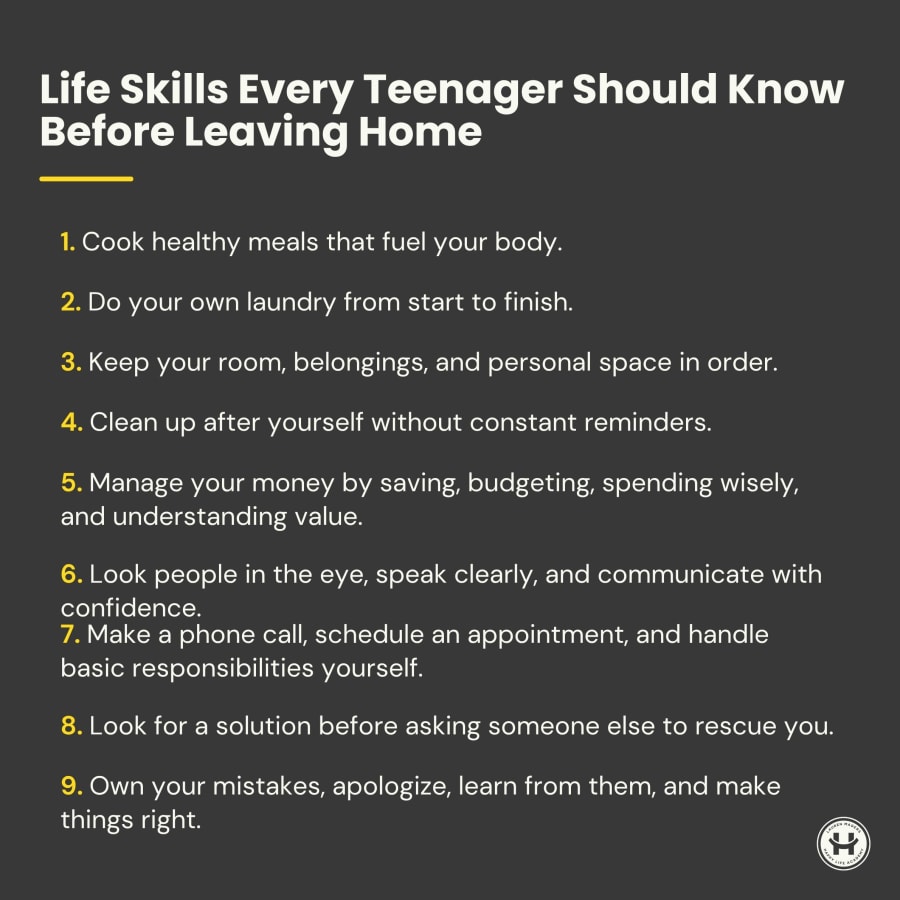
Cook healthy meals that fuel your body.
Cooking is one of the most important life skills for teens. And, no, I am NOT talking about Easy Mac and TV dinners. Our kids need to know how to cook real, whole foods and nutritious meals that nourish their bodies. Health impacts every part of the life they’re building, so teach them how to plan meals, grocery shop, follow a recipe, and confidently feed themselves well.
Do your own laundry from start to finish.
Your teenager should know how to do every part of laundry. That means sorting, washing, drying, folding, and more! Beyond the basics, make sure you’re also teaching them how to read care labels, choose the right washer settings, treat various types of stains, iron out wrinkles, and store clothing properly. In my opinion, clean clothes should be 100% your kids' responsibility by the time they're 13.
Keep your room, belongings, and personal space in order.
Kids should be masters of their space. They should know what they own, where it belongs, and how to create simple systems that keep their things organized and easy to find. Teach them to manage their clothes, school supplies, important documents, and personal belongings, and to appreciate what they have enough to take care of it.
Clean up after yourself without constant reminders.
Our kids should know how to clean a space, not just pick up after themselves when we tell them to. Eventually, they should be able to look around, recognize what needs attention, and take care of it without waiting for someone to ask. But we can’t expect them to know how unless we teach them. Show them how to clean a bathroom, wash dishes, wipe down the kitchen, vacuum, mop, dust, and leave a space better than they found it.
Manage your money by saving, budgeting, spending wisely, and understanding value.
Money management is an essential skill for teens preparing to leave home. But studies have found that just talking about finances isn’t enough to create capable money managers. Kids need opportunities to actually practice saving, budgeting, spending, and making financial decisions for themselves.
Give them real money to manage while the stakes are still low. Let them save for something they want, blow their budget, regret a purchase, and figure out how to do it differently next time. That’s how we raise kids who understand the value of a dollar and know how to lead themselves financially.
Look people in the eye, speak clearly, and communicate with confidence.
Our kids need to know how to walk into a room, look someone in the eye, speak clearly, and confidently communicate what they need, think, or believe. If you don’t want to raise mediocre kids, stop teaching them to shrink themselves. Teach them how to introduce themselves, have a conversation with an adult, ask thoughtful questions, listen when someone else is speaking, and advocate for themselves respectfully. Their voice is one of the most powerful tools they have. Teach them how to use it.
Make a phone call, schedule an appointment, and handle basic responsibilities yourself.
Please stop making every phone call for your teenager. Making appointments, asking questions, getting information, and handling basic responsibilities are life skills for kids that they can only learn by actually doing them. If they need to schedule a haircut, call about a job application, or make an appointment, hand them the phone! Yes, it might be awkward at first. That’s the point. Confidence comes from doing things that once felt uncomfortable and realizing, “Oh, I can actually handle this.”
Look for a solution before asking someone else to rescue you.
If you want to build confidence, resourcefulness, and resilience in teenagers, you can’t be doing everything for them. I already talked about how they can make their own phone calls and schedule their own appointments, but it goes beyond that. What do you do if your child forgets a homework assignment, offends a good friend, or gets in over their head with a commitment they made? It’s so tempting to swoop in and rescue them.
But instead, teach them to stop and ask, “What can I do about this?” Let them email the teacher, repair the friendship, talk to the coach, rearrange their schedule, or deal with the natural consequences of a mistake. You can listen and offer guidance, but don’t steal the problem from them. World-ready kids need practice solving real problems while they still have you nearby. That’s how they learn to take ownership, think critically, and trust themselves to figure things out.
Watch: My Instagram video on letting teens solve their own problems
Own your mistakes, apologize, learn from them, and make things right.
Mistakes aren’t the problem. Refusing to own them is. Your teenager needs to know how to say, “I messed up,” without blaming someone else, making excuses, or waiting for you to smooth everything over. Teach them to give a real apology, figure out how to make things right, and then change their behavior moving forward. We are not raising kids who need to be perfect. We’re raising humans with enough self-awareness, integrity, and leadership to take responsibility when they get something wrong.
Here’s more on how to empower children when they make a mistake.
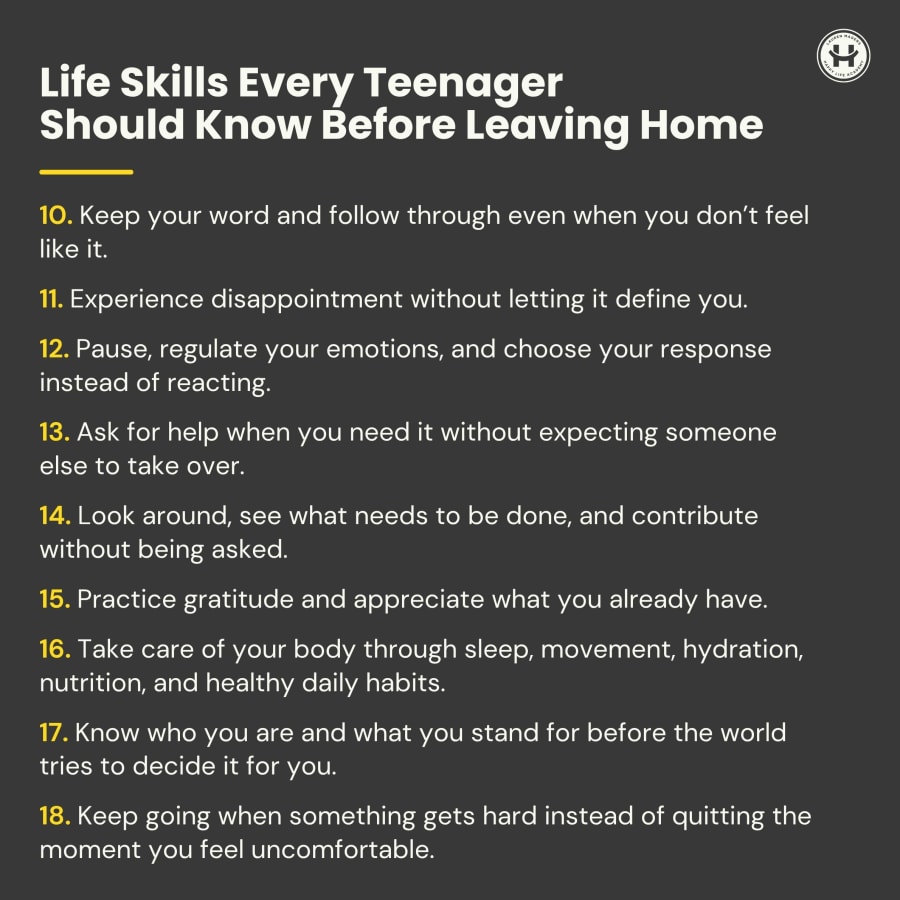
Keep your word and follow through even when you don’t feel like it.
Your word should mean something. Teaching teenagers responsibility means teaching them that when they say they’re going to show up, finish something, help someone, or take ownership of a commitment, other people should be able to count on them. Motivation comes and goes. Integrity doesn’t. But follow-through doesn’t magically appear when kids turn 18. We have to give them opportunities to practice it right now.
In my Family Operating System™, I show families how to use what I call Happy Life Contracts to build commitment and accountability from an early age. (I started using these with my own kids as young as three!) Together, you and your child choose something they’re committing to, whether that’s changing a behavior, building a new habit, reaching a personal goal, or following through on a responsibility. The contract gives that commitment structure: a clear goal, a plan for getting there, regular check-ins, mantras that reinforce who they’re becoming, and a celebration when they follow through.
This is how we raise kids who don’t need someone constantly pushing them to keep their word. We teach them how to lead themselves.
Experience disappointment without letting it define you.
Please stop trying to protect your kids from every disappointment. They’re going to lose the game, miss the opportunity, get rejected, watch someone else get picked, and hear “no” when they desperately wanted a “yes.” That’s life! Our job isn’t to remove every hard feeling. It’s to teach them that they can feel disappointed without falling apart, blaming everyone around them, or deciding one setback defines who they are. Let them experience hard things while they still have you nearby, then teach them how to get back up and keep going.
Pause, regulate your emotions, and choose your response instead of reacting.
Your emotions are real, but they don’t get to run your life. Teach your teenager that they can be angry without becoming cruel, frustrated without quitting, embarrassed without lashing out, and overwhelmed without completely shutting down. Give them tools to pause, recognize what they’re feeling, regulate themselves, and intentionally decide what happens next. Emotional intelligence isn’t never having big feelings. It’s knowing that you are still the leader of yourself when those feelings show up.
Not sure how to teach this? Here are my top three tips for raising emotionally intelligent kids.
Ask for help when you need it without expecting someone else to take over.
Being independent does NOT mean never needing anyone. In fact, knowing when and how to ask for help is one of the most important life skills for teenagers. We want our kids to be confident enough to say, “I don’t know,” “I’m stuck,” or “Can you help me?” But asking for support is different from handing someone else the problem.
Teach your teenager to try first, ask thoughtful questions, listen to guidance, and then stay responsible for what happens next. That’s the balance we’re after: kids who know they don’t have to do life alone, but also know they are ultimately responsible for leading their own lives.
Look around, see what needs to be done, and contribute without being asked.
Stop raising kids who wait around for someone to tell them what to do. Your teenager should notice when someone could use help loading groceries into their car, pick up the trash sitting two feet from the garbage can, hold the door for the person behind them, or step in when an extra set of hands would make something easier. Contribution isn’t just about chores or what happens inside your own home. It’s about raising humans who pay attention to the people and world around them and look for ways to leave both a little better than they found them.
Practice gratitude and appreciate what you already have.
Listen to me: your kids are not entitled to the lifestyle YOU worked for. They don’t automatically deserve designer clothes, the newest phone, a brand-new car, expensive vacations, or unlimited spending money just because you can afford it. Give your kids an incredible life. Just don’t teach them to expect one without earning, building, or contributing to it.
Let them want things.
Let them work for upgrades.
And, let them experience the difference between what’s provided and what’s earned.
Gratitude grows when kids understand the value behind what they have. Teach them to notice the work, sacrifice, time, and generosity that make their lives possible instead of assuming more is always coming. You can give your kids the world without raising kids who think the world owes them something.
Watch: My Instagram reel on raising grateful kids
Take care of your body through sleep, movement, hydration, nutrition, and healthy daily habits.
Please stop treating health like something our kids will magically figure out when they become adults. Taking care of your body is one of the most important skills teenagers need for adulthood. We need to elevate their awareness so they understand how sleep, movement, hydration, nutrition, hygiene, and their everyday choices actually affect the body they live in.
I’ve always challenged my kids to think this way. If they want an unhealthy food, I’ll ask them, “Give me one life benefit.” What is this doing for you? What are you getting from this choice? I want them thinking about the connection between what they put into their bodies and the life they want to live.
Eventually, no one is going to tell them to go to bed, drink some water, move their body, or eat something that actually fuels them. Elevate their awareness now so they can lead themselves later. It’s their body, and their choices NEED to be their responsibility.
Know who you are and what you stand for before the world tries to decide it for you.
If your kids don’t know who they are, the world will decide for them. Friends, social media, relationships, trends, and culture are constantly sending them messages about who they should be, what they should value, and what they need to do to belong. Help your teenager get crystal clear on their values, standards, strengths, boundaries, and the kind of human they want to become. Raise kids with enough conviction to stand alone when everyone else is telling them to follow.
Keep going when something gets hard instead of quitting the moment you feel uncomfortable.
Listen to me: your kids need to struggle. They need to get frustrated, fail, practice, try again, and discover that discomfort is not an emergency. Hard does not mean wrong. Frustrated does not mean incapable. Struggling does not mean it’s time to quit.
Let them wrestle with the hard math problem. Finish the season they committed to. Practice the skill they’re terrible at before they get good at it. We cannot rescue our kids from every uncomfortable experience and then expect them to suddenly become resilient adults. Resilience is built in the moments when quitting would be easier, but they learn to keep going anyway.
How to Teach Life Skills to Teenagers
Start right now. Don’t wait until your teenager is weeks away from moving out to teach them how to manage money, cook dinner, solve problems, or take responsibility for their life. And if you’re reading this thinking, Ah! I should have started years ago, forget the guilt. Start today. Give them real responsibility, let them practice, stop stepping in so quickly, and intentionally build these skills into every moment you have left.
This is exactly what I teach inside Lauren Magers’ Happy Life System™. It’s a complete Family Operating System™ designed to help you raise confident, capable, world-ready humans through the way your family actually lives every day. If you want to see what that looks like, start with my free Family Operating System™ quiz. In just a few minutes, you’ll see where your family is getting stuck and which shifts and systems can help you prepare your kids for the real world. Then you can book a call to map out your next step.
Take the quiz. Build the system. Change everything.
How to Know If Your Teen Is Ready for Adulthood: Life Skills Checklist for Teens
Before your teenager leaves home, you want to know they can do more than cook a meal or wash their clothes. The most important skills teens need before leaving home show up in how they lead themselves when you’re not there to remind, rescue, or make the decision for them.
Use this checklist to see where your teen is already stepping up and where they may need more opportunities to practice:
- You don’t have to remind them about every responsibility.
- Mistakes become learning opportunities instead of problems you have to fix for them.
- New situations don’t automatically send them looking for you to take over.
- Their responsibilities still get done even when they don’t feel like doing them.
- Good decisions happen when you’re not there to supervise.
- Setbacks may upset them, but they can recover and figure out what to do next.
- Asking for help comes after they’ve tried to solve the problem themselves.
- Other people can count on them to show up, follow through, and keep their word.
- Freedom doesn’t immediately lead to abandoning routines, responsibilities, or expectations.
- Their choices increasingly reflect their own values rather than whatever their friends are doing.
- Their schedule, deadlines, and commitments get managed without you keeping track of everything for them.
- Basic meals, laundry, hygiene, and personal spaces get taken care of without you reminding them what needs to be done.
Raising world-ready kids starts before they leave home.
Your kids don’t need to leave your home knowing how to do everything perfectly. They need to leave knowing they can figure things out. Give them responsibility now. Let them struggle, practice, contribute, make mistakes, and build the confidence that comes from leading themselves. Because one day, you won’t be standing beside them telling them what to do next. The work we do now is what prepares them to step into that day and think, “I’ve got this.”

Written by
Lauren Magers
Lauren Magers is a parenting coach, author, entrepreneur, and mom of four. For 15+ years she has applied business and leadership systems to family life, and she created the Happy Life System™ and its Family Operating System™, which have reached 200,000+ lives in 35+ countries.
More about Lauren


